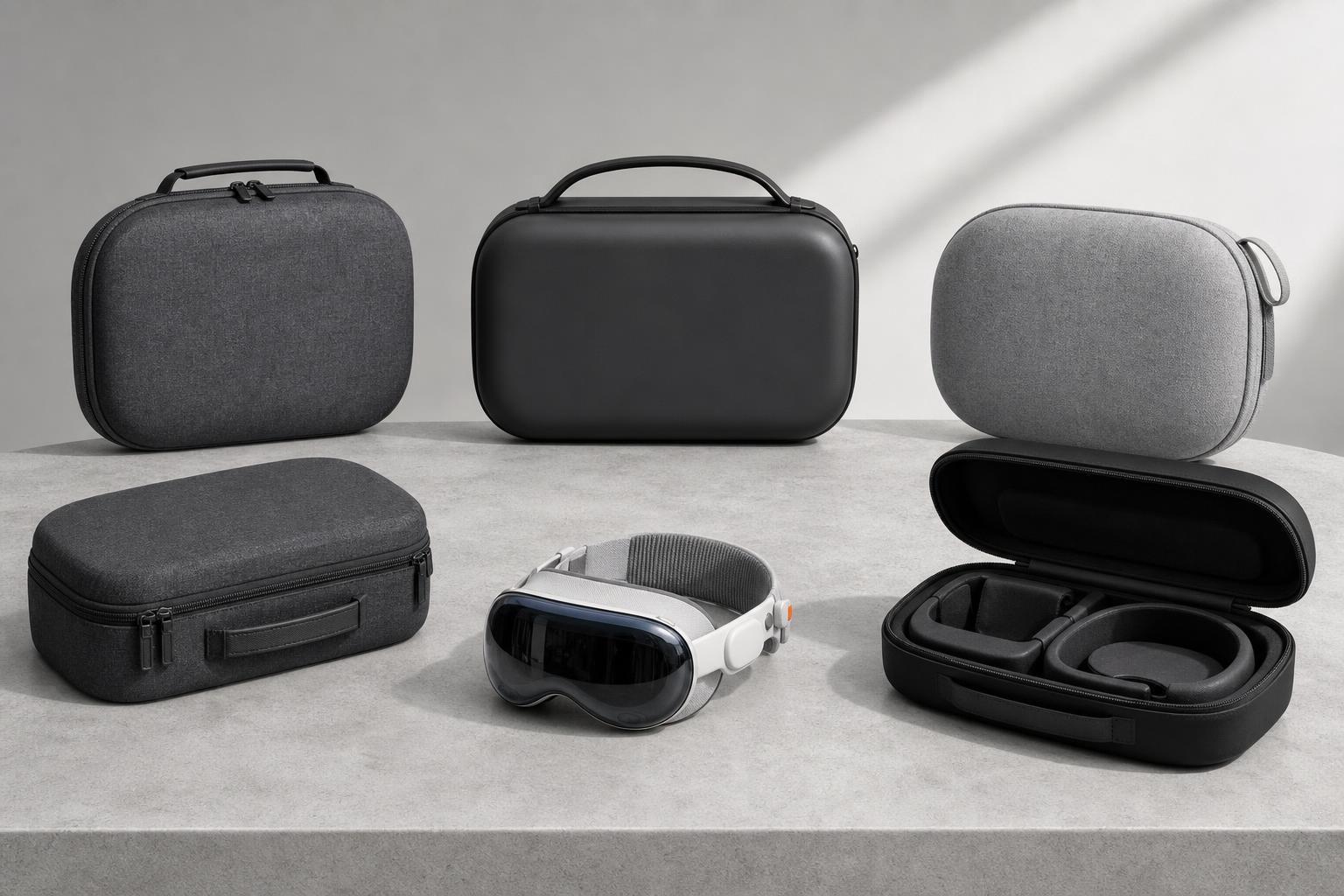
Apple Vision Pro is a premium headset with a lot of sensitive hardware, so the case you choose matters. A good carrying case should protect the headset, cover the external battery and accessories, and still be practical enough to travel with regularly.
Because Vision Pro is larger and more delicate than most headsets, not every “VR case” is a good fit. The best options balance rigid protection, smart internal organization, and enough space for the light seal, straps, charger, and battery cable.
What to Look for in a Vision Pro Carrying Case
Before comparing specific styles, it helps to know which features actually matter for Apple Vision Pro. The headset is expensive, the front glass area needs careful protection, and the external battery adds another item that must be stored securely.
- Rigid or semi-rigid outer shell for impact protection
- Custom-fit or well-padded interior to keep the headset from shifting
- Room for the external battery, cable, and charger
- Soft lining to help protect lenses and glass surfaces
- Handle or strap for easier transport
- Compact enough to fit in a backpack, carry-on, or larger travel bag
1. Apple Vision Pro Travel Case
The official Apple Vision Pro Travel Case is the most straightforward option if you want a case designed specifically for the headset. It is built to match the shape of the device and its accessories, which reduces guesswork about fit.
The main advantage is convenience: you are less likely to fight with awkward placement or oversized empty space. It is especially appealing if you travel with Vision Pro frequently and want a simple, clean setup.
2. Hard Shell Travel Cases with Custom Foam
A hard shell case with a custom-cut foam insert is one of the safest ways to transport Vision Pro if you want maximum protection. These cases usually use a rigid exterior with foam shaped around the headset and accessories.
This style is ideal when the case may be handled roughly or packed with other gear. The rigid shell helps protect against pressure, while the foam reduces movement inside the case.
3. Soft-Sided Organizer Cases
Soft-sided organizer cases are lighter and easier to carry than rigid hard cases. They usually have padded compartments, zippered pockets, and flexible storage for small accessories.
These cases are useful if you want something that fits in a backpack or tote without adding much bulk. The tradeoff is that they generally offer less crush protection than a hard shell case.
4. Backpack-Style Carry Solutions
Some users prefer a backpack designed to hold both the Vision Pro and the rest of their travel gear. This can be a smart choice if you carry a laptop, tablet, or accessories along with the headset.
A backpack makes sense when portability matters more than a dedicated compact case. Look for a model with a padded compartment, secure zippers, and enough structure to prevent the headset from being squeezed by other items.
5. Sling or Compact Carry Cases
Compact sling-style cases can work well for short trips when you only need to carry the headset and a few essentials. They are less bulky than backpacks and can be easier to access on the move.
This option is best if you prioritize convenience over maximum protection. A compact case should still have a firm outer structure and enough internal padding to keep the headset safe.
6. Premium Hard Cases for Air Travel
If you fly often, a premium hard case designed for travel can be one of the best investments. These cases are made to handle luggage bins, overhead compartments, and the wear that comes with repeated trips.
The best air-travel cases usually combine a hard exterior, reinforced latches or zippers, and a thoughtful interior layout. They should hold the headset securely while still leaving room for essential accessories.
How to Choose the Right One for Your Use Case
The best carrying case depends on how you use Apple Vision Pro most often. Someone taking the headset between home and office has very different needs from someone flying with it every week.
- Choose a hard shell case if protection is your top priority.
- Choose the official travel case if you want the most tailored fit and simple packing.
- Choose a soft-sided organizer if you care most about lighter weight and everyday convenience.
- Choose a backpack-style solution if you want one bag for the headset and other gear.
- Choose a compact sling case only if you are sure it has enough room for all required accessories.
In general, the best case is the one that fits your accessory loadout without forcing the headset into a cramped space. If you always carry the battery, charger, and cable, make sure the case is designed with those items in mind rather than treated as an afterthought.
Practical Packing Tips for Vision Pro Owners
- Store the headset so the lenses and front surface are not pressed against hard objects.
- Keep the battery cable coiled loosely instead of forcing it into a tight bend.
- Remove loose accessories that could scratch the headset during transport.
- Check that zippers, clips, or latches do not press directly on the device.
- If the case has removable inserts, verify that they do not shift once packed.
Choosing the Best Type of Case
For most owners, the best Vision Pro carrying case is the one that protects the headset without making daily transport annoying. If you mainly move between home and office, a soft-sided organizer or official travel case may be enough. If you fly or pack the headset with other equipment, a hard shell case is usually the safer choice.
The key is to avoid treating Vision Pro like a generic VR headset. It deserves a case with a better fit, more padding, and a layout designed around the headset’s unique shape and accessories.