A good closet motion sensor light should turn on quickly, fit in a tight space, and make it easy to find what you need without reaching for a wall switch. The best options also avoid false triggers, provide enough brightness for your closet size, and are simple to install.
Below are six useful types of motion sensor lights that work especially well in closets, along with the features that matter most when comparing them.
1. Battery-Powered Stick-On LED Light Bars
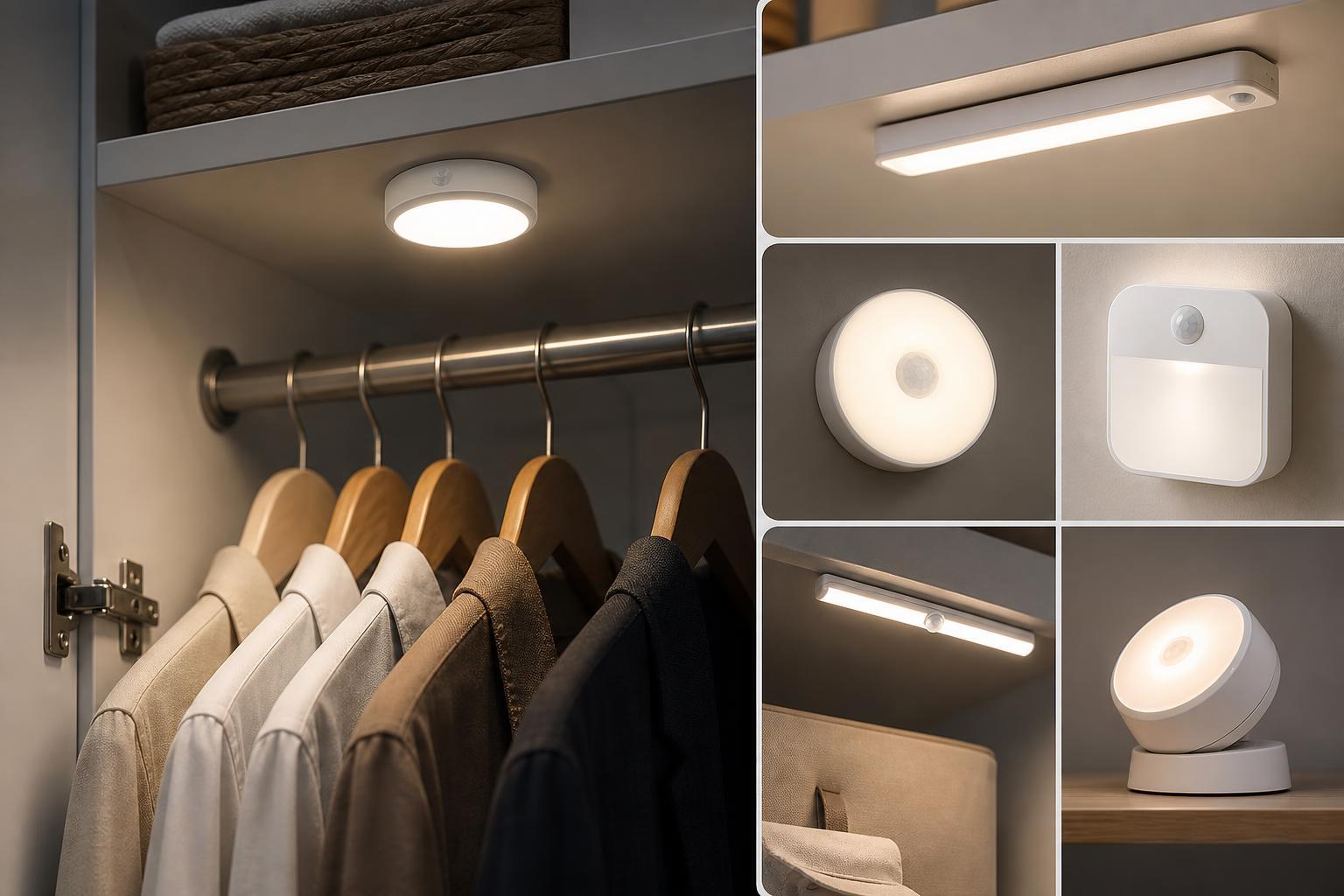
These are one of the easiest closet lighting options because they do not need wiring. Most models attach with adhesive strips, magnetic mounts, or small brackets, and they usually use AAA batteries or a rechargeable pack. They are a strong choice for rented spaces or closets where you do not want to drill holes.
2. Rechargeable Under-Cabinet Style Sensor Lights
Rechargeable sensor lights are convenient because you do not need to replace batteries as often. Many charge with USB and can be removed for charging, which makes them practical for closets that get used regularly. A good rechargeable model should balance brightness with battery life so it does not need frequent charging.
3. Slim Plug-In Motion Sensor Lights
If your closet has an outlet nearby, a plug-in light can be a simple and reliable solution. These lights are often brighter than battery models and do not need battery changes. They are useful in larger reach-in closets, utility closets, or wardrobe areas where you want more consistent lighting.
4. LED Strip Lights with Motion Sensors
Motion sensor LED strips can be a smart fit for shelves, hanging rods, and narrow closet edges. They spread light more evenly than a single small puck light and can make it easier to see items on multiple shelves. Many strip kits also let you trim the strip to fit the closet layout.
5. Ceiling-Mounted Motion Sensor Dome Lights
A ceiling-mounted dome light can work well if you want a more traditional overhead light with motion activation. These lights are often brighter and wider in coverage than small stick-on fixtures, making them useful for walk-in closets or larger storage spaces. They usually take more effort to install but provide a cleaner finished look.
6. Compact Puck Lights with PIR Sensors
Puck lights are small, round, and easy to place in corners, on shelves, or near hanging sections. Models with passive infrared, or PIR, sensors can detect motion well in close-range spaces like closets. They are a good option when you want focused lighting in specific spots rather than full-room illumination.
What to Look for Before Buying
- Brightness: A closet light should be bright enough to see clothing labels, shelves, and corners without being harsh.
- Sensor range: A short, accurate detection range is usually better for closets than a long-range sensor that may trigger too easily.
- Auto-off delay: A light that stays on for 20 to 60 seconds after motion stops is often enough for most closets.
- Power source: Battery, rechargeable, plug-in, and hardwired options each suit different closet layouts.
- Mounting method: Adhesive pads, magnets, screws, and clips affect how easy the light is to install and remove.
- Color temperature: Neutral white or cool white usually makes clothes and items easier to distinguish.
Which Closet Light Is Best for Your Space?
- Choose a battery-powered stick-on bar if you want the simplest installation.
- Choose a rechargeable light if you want to avoid frequent battery replacement.
- Choose a plug-in light if you have an outlet nearby and want stronger brightness.
- Choose LED strip lights if your closet has shelves or multiple sections that need even lighting.
- Choose a ceiling-mounted dome light if you want overhead coverage for a larger closet.
- Choose puck lights if you only need light in a few specific spots.
Installation Tips That Make a Difference
- Test the sensor position before mounting the light permanently. A poorly aimed sensor may not detect you until you are already inside the closet.
- Place the light where clothing will not block the sensor or reduce the spread of light.
- If the light is adhesive-mounted, clean the surface first so it sticks properly.
- Avoid pointing the sensor at moving items outside the closet, such as curtains or a nearby doorway, if that could cause false triggers.
- For rechargeable or battery-powered lights, make sure you can remove them easily for charging or battery changes.
A Practical Choice Matters More Than Fancy Features
For closet lighting, the best motion sensor light is usually the one that fits the space cleanly and turns on reliably every time you open the door. Simple models often work just as well as expensive ones when the brightness, sensor range, and mounting style match the closet.
If your closet is small, start with a compact battery or rechargeable light. If it is larger or has shelves and corners, look for a brighter bar, strip, or ceiling-mounted option.