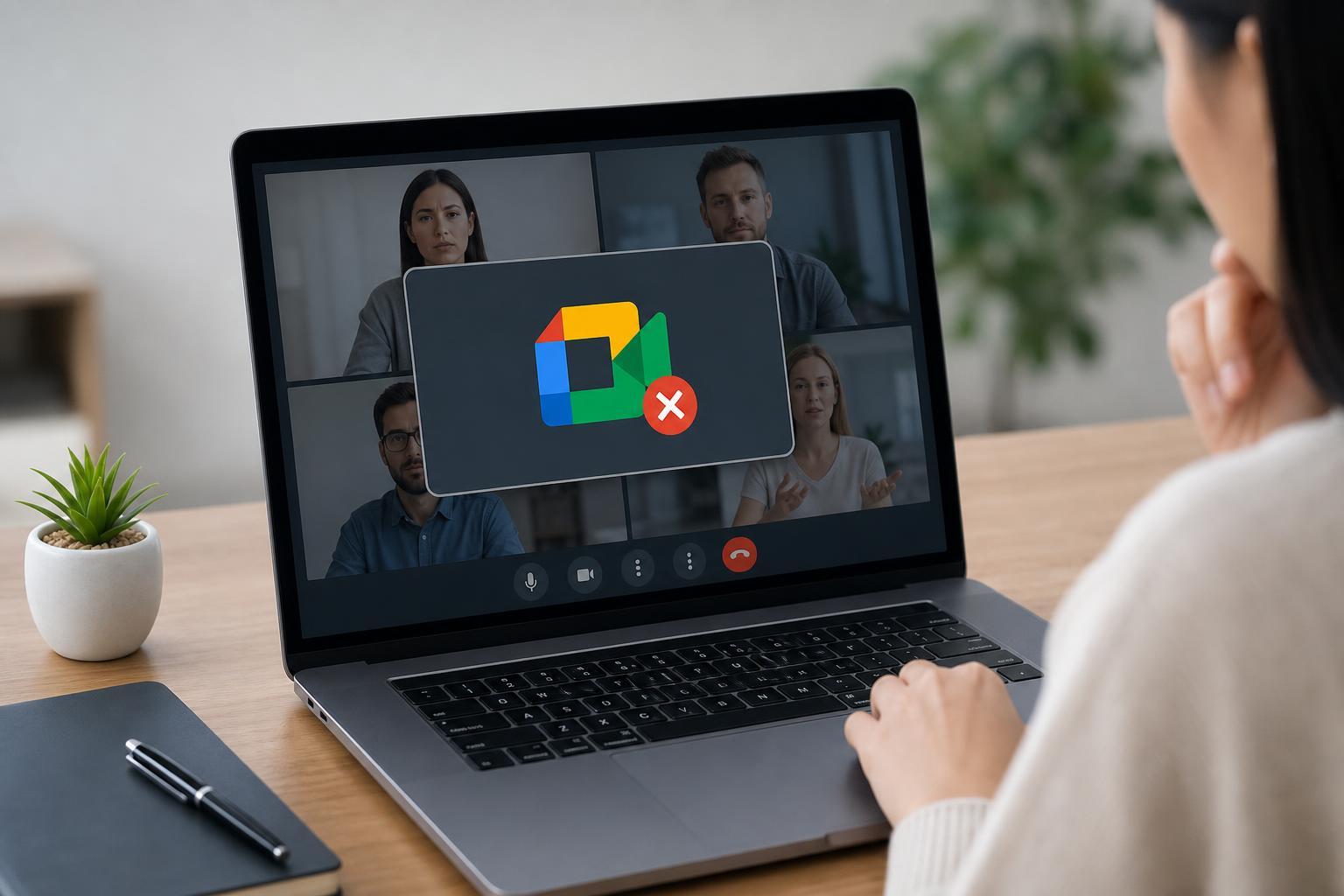
The Google Meet “Not Allowed to Join” error usually means Meet is blocking access for account, permission, or meeting-policy reasons rather than a problem with your device. In many cases, the fix is simply using the right account or getting the meeting host to allow access.
Because this message can appear for different reasons, the best solution depends on whether you are a guest, a student, a work account user, or the meeting organizer.
1. Make Sure You’re Using the Right Google Account
One of the most common causes is being signed into the wrong Google account. Some meetings only allow users from a specific organization, school, or domain. If you try to join with a personal account when the meeting expects a work or school account, Google Meet may block you with a “Not Allowed to Join” message.
- Open Google Meet and sign out of any extra Google accounts you do not need for the meeting.
- Sign back in with the account the meeting organizer expects you to use.
- If you were invited by email, check whether the invite was sent to a specific account and join from that address.
- Try opening the meeting link in an incognito or private browser window to avoid account mix-ups.
- If you are using the Meet app on a phone or tablet, confirm the device is logged into the correct Google account before joining.
2. Ask the Host to Allow or Adjust Meeting Access
If your account is correct, the meeting itself may be restricted. The host can control who is allowed to join, whether guests can request entry, and whether people outside the organization are blocked.
- Ask the host to confirm that the meeting is still active and that the link is correct.
- Have the host check the meeting’s access settings in Google Calendar or Google Meet.
- If you are outside the host’s organization, ask whether guest access or external access is disabled.
- If you were placed in a waiting room or denied entry, ask the host to admit you manually.
- If the meeting uses host controls, ask the organizer to add you as an allowed participant before you try again.
How to Tell Which Cause Is More Likely
A quick clue is whether other people can join the same meeting. If everyone else gets in and only you are blocked, the issue is usually your account or the organizer’s permissions for your account. If no one can join, the meeting link, host settings, or meeting availability may be the problem.
- Wrong account: you are signed into a personal account when a work or school account is required.
- Access restriction: the host allows only members of a specific domain or invited guests.
- Expired or changed link: the meeting details were updated and the old link no longer works.
- Host approval required: the host needs to admit you before you can enter.
- Organization policy: your school or company may block external meetings or certain users.
When the Problem Is on the Host Side
If you are the organizer and people are seeing “Not Allowed to Join,” check the meeting’s access rules first. Make sure the invite was sent to the right people, the meeting is not limited to internal users only, and the correct meeting link is being shared.
- Confirm that guest access is enabled if outsiders need to join.
- Check that the meeting is scheduled under the correct Google account or calendar.
- Review host controls that may be blocking join requests automatically.
- Regenerate or resend the meeting link if the original one was copied incorrectly.
What to Try if It Still Won’t Let You In
If the two main fixes do not solve it, the meeting is likely being blocked by a policy setting rather than a temporary glitch. Try joining from a different browser or device, but only as a test. If the same error appears everywhere, the host or administrator needs to change the access rules.
Which Fix Should You Try First?
Start with the account check, because the wrong signed-in Google account is the easiest problem to rule out. If that does not help, contact the meeting host and ask them to verify the access settings. Those two steps solve most “Not Allowed to Join” errors in Google Meet without any deeper troubleshooting.