
Colorizing old black-and-white photos can make family memories, archive images, and historical pictures feel much more vivid. Free online tools are the easiest way to try it because they usually work directly in your browser and do not require editing experience.
That said, results vary a lot. Some tools are better for portraits, some handle old scanned photos more naturally, and some are faster but less accurate. The tools below are all free to try online, but the quality, upload limits, and privacy policies may differ.
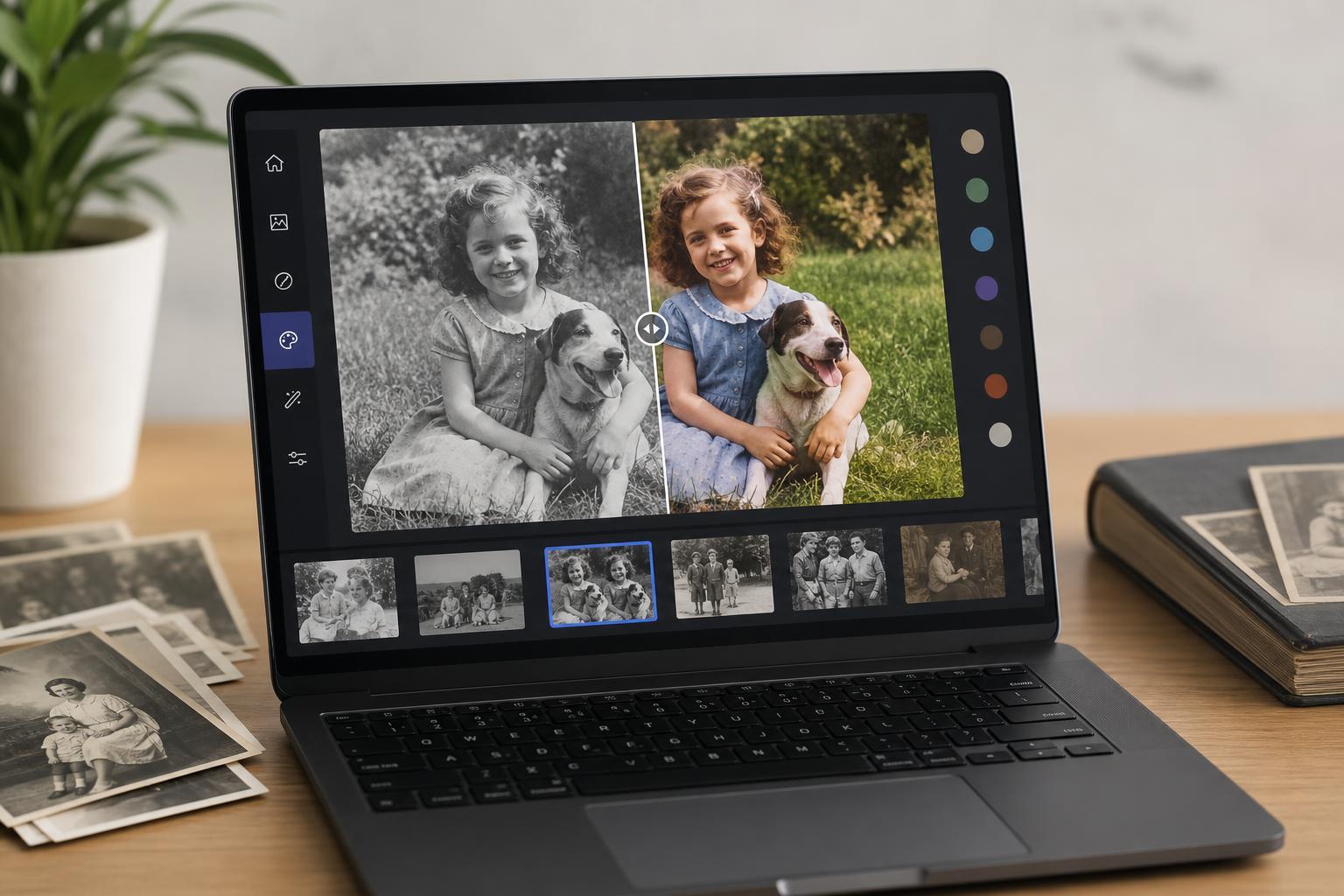
1. Palette.fm
Palette.fm is one of the most popular online colorization tools for black-and-white photos. It is designed specifically for turning monochrome images into color, and it often produces strong results on portraits, old family photos, and historical images.
It is easy to use: upload a photo, let the tool process it, and then review the colorized version. Many users like it because it tends to produce natural-looking skin tones and clothing colors compared with very generic automatic colorizers.
2. MyHeritage In Color
MyHeritage offers an online photo colorization feature that is especially useful if you are working with genealogy photos or archived family images. It is part of a broader photo enhancement set, so it can be helpful when your old image also needs sharpening or restoration.
The tool is simple to use and generally does not require editing skills. It is also a good option if you want to compare a colorized result with other restoration tools in the same workflow.
3. Hotpot AI
Hotpot AI includes a free online colorization tool that works well for casual use and quick experiments. It is not only for black-and-white photos, so it may also fit users who want other lightweight image tools in the same place.
Hotpot’s colorization can be helpful for getting a fast first pass. If you are editing a scan from an old print, the results may be good enough to show what the photo could look like in color before doing more careful restoration elsewhere.
4. ImageColorizer
ImageColorizer is another browser-based option focused on restoring old photos. It combines colorization with related tools such as enhancement and retouching, which can be useful if the image is faded, scratched, or low contrast.
The main advantage is convenience. You can work on an image without installing software, and the interface is usually straightforward for beginners. It is a practical choice when you want a single site to handle multiple steps in an old-photo restoration workflow.
5. VanceAI Photo Colorizer
VanceAI Photo Colorizer is aimed at automatic enhancement and restoration, including black-and-white colorization. It is often used by people who want a polished result with little manual editing.
This tool can be a good fit for portraits and reasonably clear scans. Like most automatic colorizers, it works best when the image has a visible subject and enough detail for the system to interpret clothing, skin, and background areas.
6. Media.io Black and White Photo Colorizer
Media.io offers a free online black-and-white photo colorizer that is easy to access through a browser. It is part of a larger set of media tools, which makes it convenient if you also work with videos, audio, or other images.
The main appeal is simplicity. Upload the image, let the tool process it, and review the result. It is a useful option for quick colorization jobs where you do not want to learn a complex editor.
7. Fotor AI Photo Colorizer
Fotor includes an AI-based photo colorizer that can handle black-and-white images from a browser. It is also known for general photo editing, so if you want to fine-tune brightness, contrast, or sharpness after colorizing, it can be convenient.
Fotor can be especially handy when the first colorization pass needs a little cleanup. If the colors are close but not perfect, you may be able to improve the final image with simple adjustments instead of starting over.
How to Get Better Results from Any Colorization Tool
- Use the clearest scan or photo you have. A sharp image gives the colorization tool more detail to work with.
- Crop away unnecessary borders, dust, or blank space if they distract from the main subject.
- Try to fix exposure first if the image is extremely dark or washed out, because better contrast can improve the result.
- Test more than one tool. Different services can give very different colors from the same image.
- Check the final image carefully for strange colors on skin, clothing, hair, skies, and shadows.
If you are colorizing a historically important photo, remember that these tools are making educated guesses. They can produce attractive results, but they are not a substitute for true historical color reference.
Choosing the Right Tool
- For portraits and family photos: Palette.fm or MyHeritage In Color
- For fast casual use: Hotpot AI or Media.io
- For restoration plus cleanup: ImageColorizer or VanceAI
- For colorizing and then making edits in the same place: Fotor
If privacy matters most, read the upload and storage policy before using any online tool. If image quality matters most, try at least two services and compare the output before choosing one for a large photo project.
What to Expect from Free Online Colorizers
Free tools are great for experimenting and restoring simple photos, but they often come with limitations. Some restrict file size, some reduce export quality, and some reserve full-resolution downloads for paid plans.
- Output colors are guesses, not guaranteed to be historically accurate
- High-resolution downloads may be limited
- Some sites may require an account
- Privacy and retention policies can vary widely
- Results are usually better on clear portraits than on heavily damaged photos
For many users, that is still enough. If you only need to bring an old photo to life for sharing, printing a small copy, or seeing what it might have looked like in color, these free tools are an easy starting point.





