On X, blocking and muting both help you control what you see and who can interact with you, but they do very different things. If you want to cut off contact completely, block is the stronger choice. If you just want someone’s posts out of your feed without causing a visible confrontation, mute is usually better.
Knowing which option to use can save you annoyance, prevent unwanted interactions, and help you manage your account more comfortably. The difference matters whether you are dealing with spam, a noisy account, or someone you simply want to avoid seeing online.
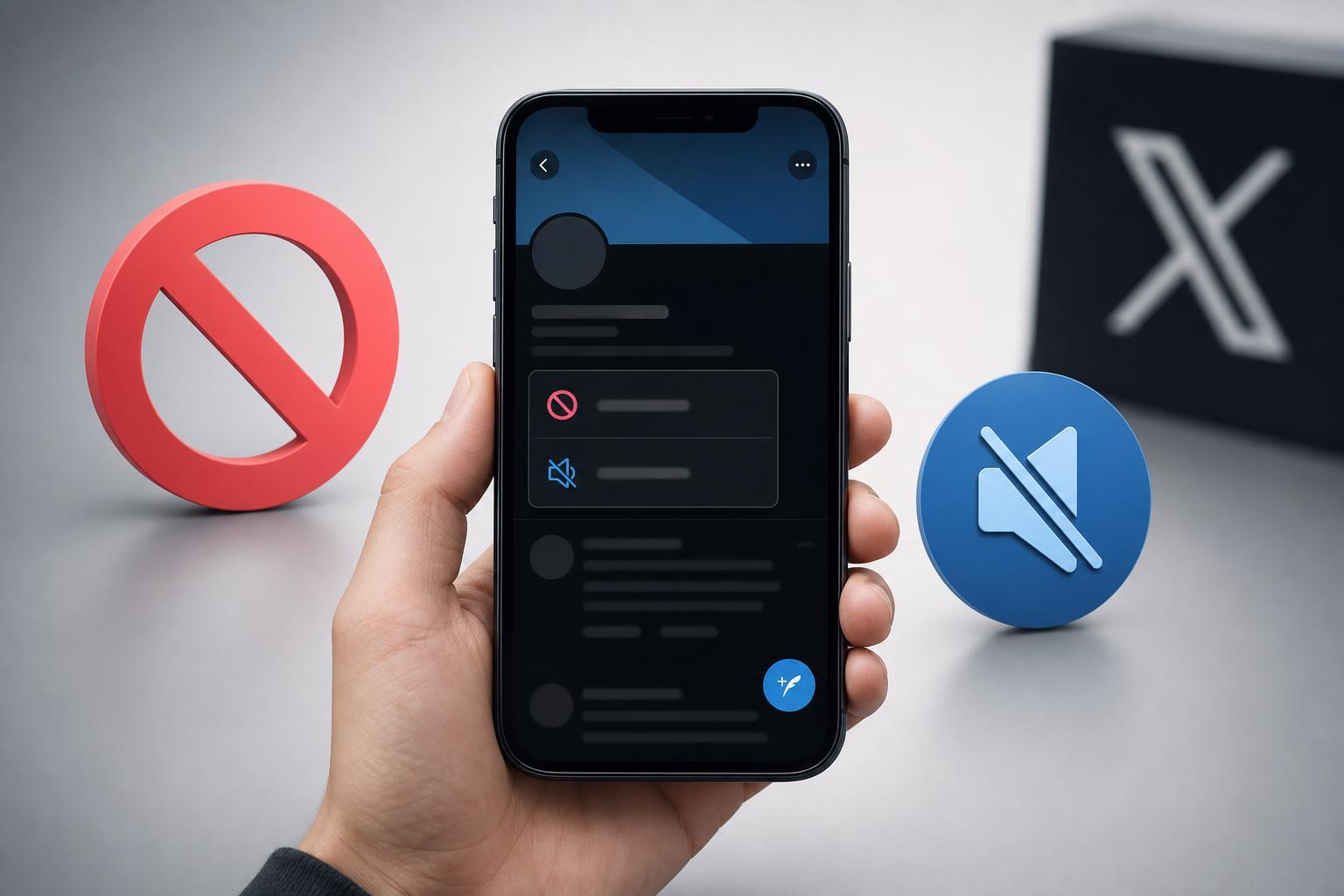
The Quick Difference Between Block and Mute
- Block stops another account from following you, seeing your posts normally, or interacting with you in the usual way.
- Mute hides an account’s posts and notifications from your view, but it does not stop them from seeing your public posts or following you if your account is public.
- Blocking is stronger and more restrictive; muting is quieter and more private.
- Use block when you want distance. Use mute when you want less visibility without the other person necessarily knowing.
What Happens When You Block Someone on X
Blocking is the most direct way to stop another account from interacting with you. When you block someone, they can no longer follow you, engage with your posts normally, or see your account in the same way they could before.
- They cannot follow your account while blocked.
- They may be prevented from liking, replying to, or reposting your content in the normal way.
- They will usually be able to tell they have been blocked if they try to visit your profile or interact with you.
- If your account is private, blocking adds another layer of control over who can access your content.
Blocking is usually the right option if someone is harassing you, sending unwanted attention, or repeatedly trying to contact you. It is designed to create a clear boundary.
What Happens When You Mute Someone on X
Muting hides an account’s posts and many of its notifications from your experience on X. It is a personal filter, not a restriction on the other person’s account.
- Their posts will no longer appear in your timeline.
- You may see fewer or no notifications from them, depending on how the platform handles the interaction.
- They can still follow you if your account is public.
- They can still see and interact with your public posts unless you block them or use other privacy settings.
Muting is useful when someone posts too often, talks about topics you do not want to see, or fills your feed without actually causing a problem. It keeps things quieter without making your relationship with that account obvious.
Block vs. Mute at a Glance
- Block: cuts off interaction more strongly.
- Mute: hides content from your view only.
- Block: better for harassment, spam, or unwanted contact.
- Mute: better for noise, spoilers, or accounts you want to ignore.
- Block: more likely to be noticed by the other person.
- Mute: usually private and subtle.
When You Should Block
- Someone is harassing, insulting, or threatening you.
- A bot or spam account keeps replying to your posts.
- You want to stop a specific person from seeing or interacting with your content as much as possible.
- You need a clear boundary for safety or privacy reasons.
- The account keeps trying to contact you after you have already ignored them.
Blocking is especially useful when the issue is not just annoying but intrusive. If a person is repeatedly crossing a line, block gives you more control than mute.
When You Should Mute
- An account posts too much but is not a problem otherwise.
- You want to avoid spoilers, arguments, or political content without unfollowing someone.
- You do not want to publicly signal that you are cutting someone off.
- You want a low-drama way to reduce noise in your feed.
- You are temporarily tired of seeing certain posts but may want to revisit later.
Can a Muted Person Tell? Can a Blocked Person Tell?
A muted account generally cannot tell that you muted them. Their posts simply stop appearing in your feed and notifications on your side. Blocking is different because it changes how their account behaves when they try to find or interact with yours.
That said, people sometimes notice indirect clues. For example, if they stop seeing your replies or cannot interact with your profile, they may suspect they were blocked. Mute is designed to be discreet; block is designed to be restrictive.
Which One Should You Use?
- Ask whether the problem is what you see or what the other person can do.
- Choose mute if you only want less content from that account in your own feed.
- Choose block if you want to stop unwanted attention, replies, follows, or repeated contact.
- If safety, harassment, or spam is involved, lean toward block.
- If the issue is simply annoyance, mute is usually enough.
A Practical Way to Decide
A simple test is this: if you would be comfortable with the other account still being able to see your public posts, but you do not want to see theirs, mute is the better fit. If you want to stop the interaction itself, block is the stronger tool.
You can also combine X’s other controls with either option. For example, muting words or topics can help clean up your timeline, while blocking specific accounts handles the ones that should not be contacting you at all.
Managing Your Feed More Effectively
- Use mute for overly active but harmless accounts.
- Use block for spam, abuse, and unwanted contact.
- Use private account settings if you want tighter control over who can view your posts.
- Use muted words if the issue is a topic rather than a person.
- Review your muted and blocked accounts occasionally if your preferences change.
The best choice depends on your goal. Muting is about comfort. Blocking is about control. Once you understand that difference, it becomes much easier to manage your X experience the way you want.