Instagram Reels and Stories can look similar at first, but they serve very different purposes. If you are trying to decide which format to use, the main differences come down to how long the content lasts, who can see it, and how Instagram promotes it.
Understanding the difference helps you choose the right format for quick updates, casual behind-the-scenes content, or videos you want more people to discover.
The Main Difference in One Sentence
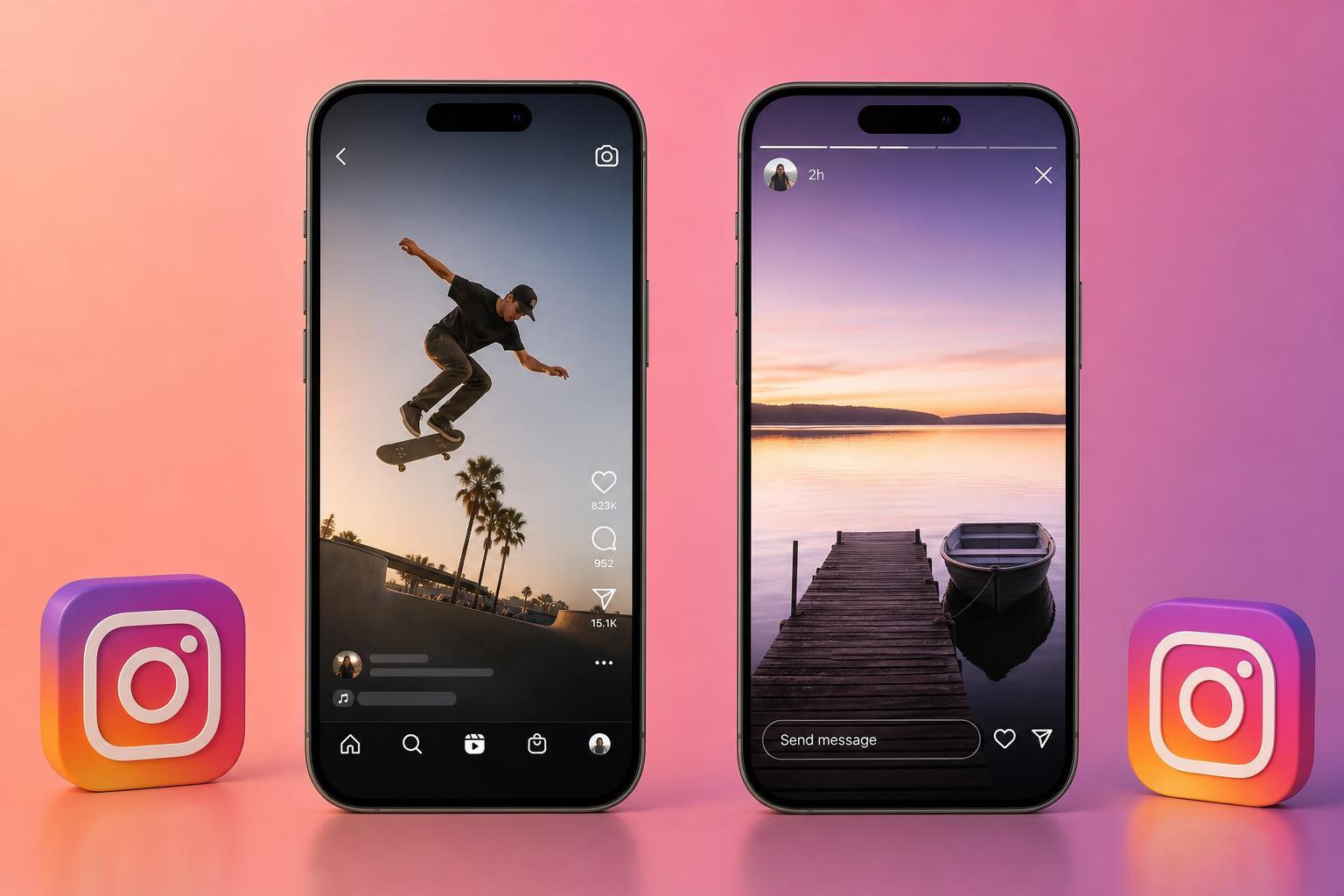
Reels are short-form videos designed for discovery and wider reach, while Stories are temporary posts meant for sharing quick, casual updates with your existing audience.
How Reels and Stories Are Different
- Reels are usually public-facing and built for discovery, even if your account is private in some cases the content still works differently from Stories.
- Stories disappear after 24 hours unless you save them to Highlights.
- Reels are edited videos with music, effects, captions, and stronger creative tools.
- Stories are simpler, faster posts that can include photos, short videos, stickers, polls, questions, and links.
- Reels tend to favor polished, shareable content, while Stories are better for informal, everyday updates.
- Reels often have a longer shelf life because they can keep getting views after posting; Stories are temporary and usually get most of their views quickly.
Reels: Best for Reach and Discovery
Reels are Instagram’s short video format for entertainment, education, and discoverability. They are useful when you want content to reach people beyond your current followers.
Reels usually work best when the first few seconds are strong. Because people can scroll past quickly, the opening should make it clear why the video is worth watching.
- Short tutorials and tips
- Product demos
- Before-and-after videos
- Trendy or entertaining clips
- Announcements you want to share widely
Stories: Best for Casual, Time-Sensitive Updates
Stories are designed for quick, temporary sharing. They are ideal for content that feels more spontaneous or does not need to stay on your profile permanently.
Stories are often more conversational than Reels. They can include stickers, GIFs, text, music, quizzes, countdowns, and interactive features that make them useful for engaging your audience directly.
- Daily life updates
- Behind-the-scenes content
- Event reminders
- Follower polls and questions
- Limited-time promotions
- Quick links and announcements
Content Lifespan
One of the biggest differences is how long the content stays visible.
- Reels remain on your profile unless you delete them, so people can find them later.
- Stories disappear after 24 hours unless you add them to Highlights.
- Highlights let you keep selected Stories on your profile for longer-term viewing.
- Because Stories vanish quickly, they are better for time-sensitive content than evergreen posts.
Audience and Visibility
Reels are generally made to be discovered by more people, including users who do not follow you. Stories are mainly shown to your followers, which makes them better for keeping in touch with an existing audience.
- Reels: broader audience, more discovery potential
- Stories: followers-first, more private-feeling communication
- Reels: stronger chance of being shared and recommended
- Stories: stronger for direct engagement and immediate response
Editing and Creative Tools
Both formats support media and text, but Reels usually offer more advanced editing options for producing polished video content.
- Reels often support longer video editing, audio syncing, transitions, and more structured video creation.
- Stories are quicker to publish and often rely on stickers, overlays, simple text, and basic video clips.
- Both formats can use text, music, effects, and interactive elements, but the overall workflow is different.
Engagement Features
Stories are especially strong for interaction because they include tools that encourage quick responses. Reels can also generate comments, likes, and shares, but the interaction style is different.
- Stories: polls, quizzes, emoji sliders, questions, countdowns, link stickers
- Reels: likes, comments, shares, saves, and remix-style interaction depending on availability
- Stories usually create more direct feedback from followers
- Reels often generate broader passive engagement from viewers who discover the video
Which One Should You Use?
- Use Reels when you want to reach new people or create content with longer-term value.
- Use Stories when you want to post quickly, share something temporary, or speak more directly to your followers.
- Use Reels for polished, repeatable content like tips, tutorials, and highlights.
- Use Stories for raw updates, announcements, and interactive follower engagement.
Can You Use Both Together?
Yes. Many creators and businesses use Reels and Stories together as part of the same content strategy.
- Post a Reel to reach new viewers.
- Share the Reel in your Story to give followers a quick reminder.
- Use Stories to add polls, questions, or behind-the-scenes context around the Reel.
- Save important Stories to Highlights if you want them to stay visible.
A Simple Rule of Thumb
Choose Reels if the content should be discovered, shared, and watched later. Choose Stories if the content should feel immediate, casual, and temporary.