If Apple Mail on your Mac is no longer receiving new emails, the cause is usually a sync problem, a connection issue, or a setting that is blocking updates. In many cases, the problem affects only one account or one mailbox, which makes it easier to narrow down than it first appears.
The fixes below focus on the most common reasons Mail stops updating, starting with the simplest checks and moving toward more advanced account and app troubleshooting.
1. Check Whether Mail Is Actually Set to Refresh
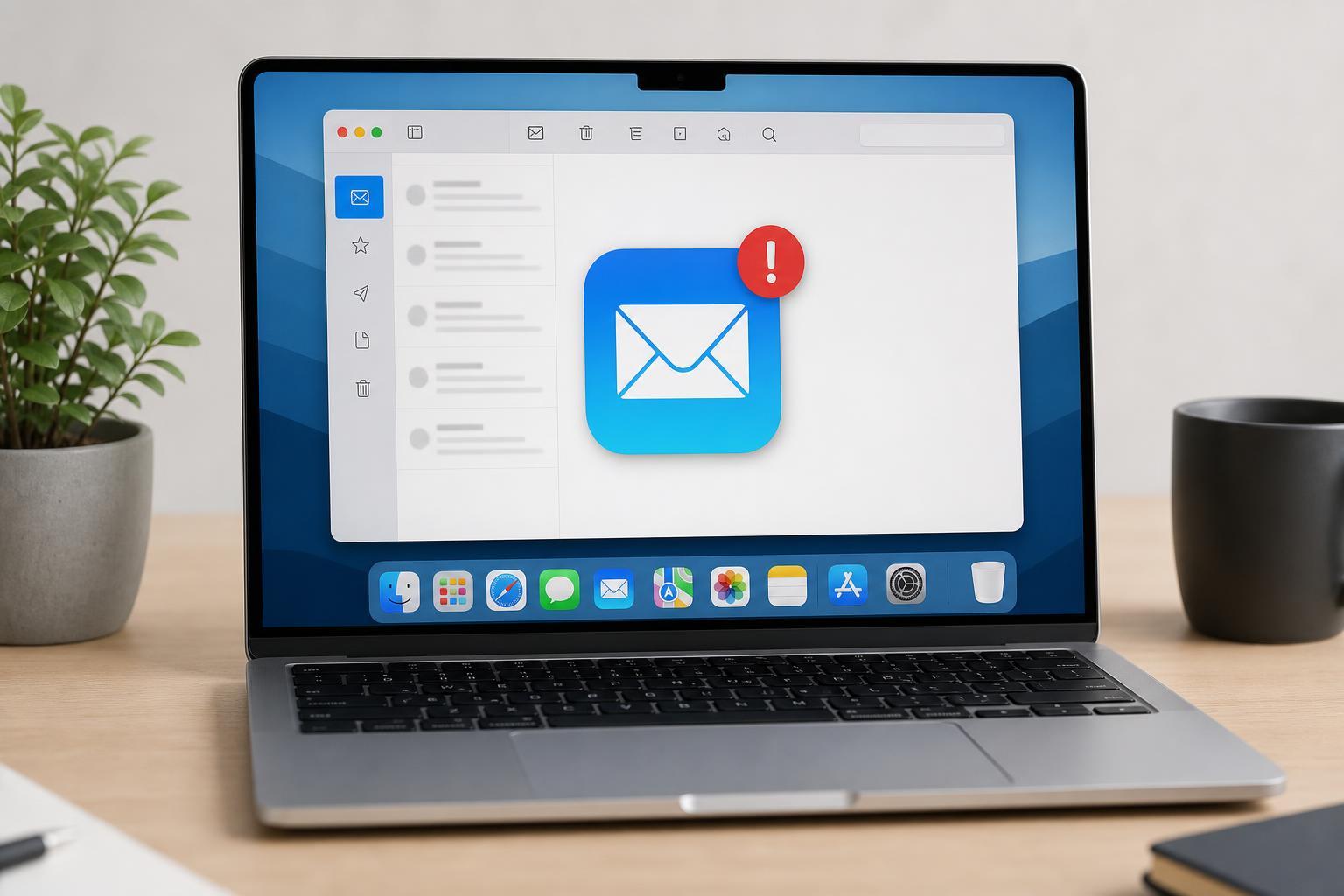
Mail can appear stuck when it is not set to check for new messages often enough, or when the inbox is paused. Start by forcing a manual check and confirming that your account is set to fetch mail automatically.
- Open Mail and select your inbox.
- Click the Get Mail button, if it is visible, or use the refresh option in the Mail toolbar.
- In Mail, open the Mailbox menu and make sure you are viewing the correct mailbox, not an archived or filtered folder.
- Check the account settings in Mail to confirm it is allowed to receive new messages automatically.
2. Confirm the Account Is Enabled and Online
Sometimes Mail has the account configured correctly but the account is disabled, temporarily offline, or signed out. This is especially common after a password change, server issue, or an interrupted login prompt.
- Open Mail and go to Mail > Settings.
- Open the Accounts or Internet Accounts section, depending on your macOS version.
- Select the affected email account.
- Make sure the account is enabled and that Mail is allowed to use it.
- If prompted for a password, sign in again and confirm the login request.
3. Check Your Internet Connection and Mail Server Status
Mail needs a stable internet connection to sync new messages. If your connection is weak or the mail provider is having server trouble, Mail may look normal but fail to pull in new mail.
- Open a website in your browser to confirm the Mac is online.
- If possible, try a different network to rule out Wi-Fi problems.
- Check your email provider’s status page or webmail to see whether messages are arriving there.
- If other apps are also struggling online, the issue is likely the network rather than Mail itself.
4. Review Mailbox Rules, Filters, and Junk Mail
Mail may be receiving messages but automatically moving them somewhere you are not looking. Rules, filters, and junk mail settings can redirect incoming mail out of the inbox without making the app look obviously broken.
- Check the Junk mailbox to see whether new messages are being misclassified.
- Look for custom rules in Mail that move, delete, or mark messages as read.
- Review any filters that may be hiding messages in the inbox view.
- Make sure the sender is not blocked if emails from only one person or company are missing.
5. Remove and Re-add the Email Account
If Mail is still not receiving messages after the checks above, the account configuration itself may be corrupted or out of sync. Removing the account and adding it again can refresh authentication, mailbox mapping, and sync settings.
- Open Mail settings and go to the account list.
- Remove the affected account from Mail.
- Restart Mail if prompted, then add the account again using the correct email address and password.
- Let Mail finish syncing before assuming the problem is still present.
When the Problem Is More Specific Than ‘Mail Is Broken’
If Mail only fails for one inbox, one sender, or one type of message, the cause is usually more specific than a general app failure. That points to a mailbox rule, server-side spam filtering, authentication issue, or an account limit such as a full mailbox.
- Only one account affected: focus on account settings and password/authentication.
- Only one sender affected: check blocked senders, spam filtering, and rules.
- Mail works on iPhone or webmail but not Mac: focus on the Mac app and its sync settings.
- No new mail at all: check connectivity, account status, and server settings first.
Which Fix Should You Try First?
If you want the fastest path, start with the account status and refresh checks, then confirm your internet connection, and finally look for filters or rules. If nothing changes, removing and re-adding the account is usually the most effective reset for Mail when the app itself is not receiving emails.