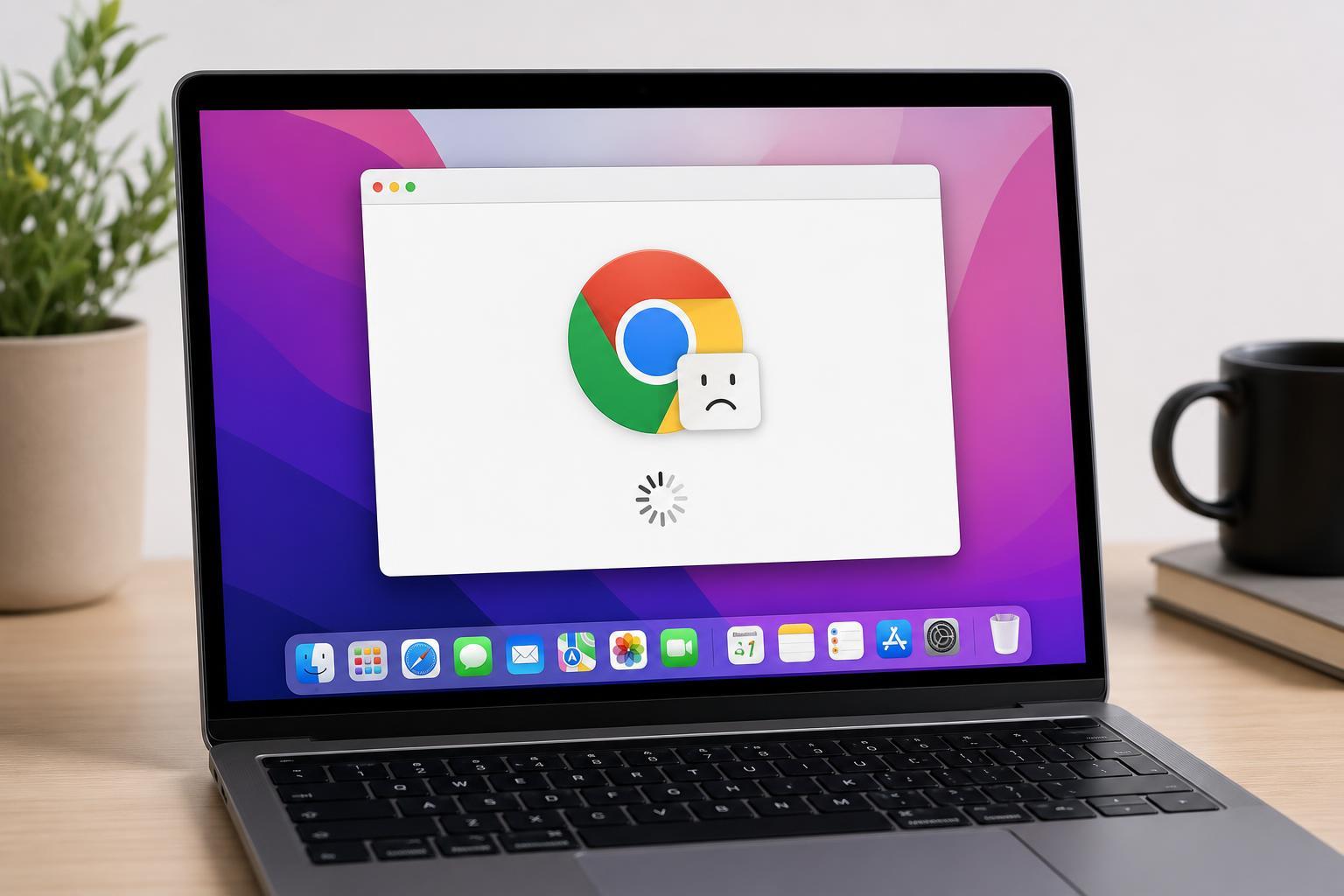
If Google Chrome won’t open on your Mac, the cause is usually something small: a stuck process, a damaged profile file, a conflicting extension, or an app issue after an update. In many cases, you can get Chrome working again without reinstalling macOS or changing anything major.
This guide focuses on two reliable fixes that solve the problem for many Mac users, plus a few checks that help you figure out why Chrome is failing to launch in the first place.
1. Quit Chrome Completely and Open It Again
Sometimes Chrome is still running in the background even though the window never appears. If that process gets stuck, clicking the app icon may do nothing or Chrome may bounce in the Dock and disappear.
- Press Command + Option + Esc to open Force Quit Applications.
- Select Google Chrome if it appears in the list.
- Click Force Quit.
- Open Activity Monitor if Chrome still seems active and search for Chrome.
- If needed, end any remaining Chrome processes, then open Chrome again from Applications or Launchpad.
2. Remove Problem Files from Chrome’s User Profile
If Chrome still will not open, the issue may be with your Chrome profile data rather than the app itself. A damaged settings file, cache, or extension data can stop Chrome from launching correctly.
- In Finder, click Go in the menu bar and choose Go to Folder.
- Enter ~/Library/Application Support/Google/Chrome/ and press Return.
- Find the Default folder or any profile folder you use.
- Rename the folder by adding something like -backup to the end, or move it to the desktop for safekeeping.
- Try opening Chrome again. If it starts, the original profile data was likely the problem.
If Chrome opens after you remove the profile folder, you can sign in again and restore sync data from your Google account. If Chrome still refuses to open, the app installation itself may be damaged and may need to be reinstalled.
Other Checks That Can Help
If the two main fixes do not solve it, these quick checks can point you toward the real cause:
- Make sure your Mac has enough free storage space for Chrome to start properly.
- Check whether a recent macOS or Chrome update happened right before the problem began.
- Test whether other apps open normally, which helps rule out a broader system issue.
- Try opening Chrome while holding Shift to see whether a startup extension or restored session is involved.
- If Chrome is managed by work or school software, confirm that a policy is not blocking it.
When Reinstalling Chrome Makes Sense
If Chrome still will not open after quitting it completely and testing a fresh profile, reinstalling the browser is a reasonable next step. On macOS, that usually means removing Chrome from Applications and downloading a fresh copy from Google.
A reinstall is most useful when the app itself was damaged, while the profile reset method is better when Chrome’s user data is the real problem. That is why trying the profile fix before a reinstall often saves time.
How to Narrow Down the Cause
- If Chrome never appears at all, a stuck process or damaged app file is more likely.
- If Chrome bounces in the Dock and then closes, profile data or an extension problem is more likely.
- If Chrome opened recently but stopped after an update, the update may have exposed an incompatible profile or extension.
- If only one Mac account has the problem, the issue is probably limited to that user’s Chrome data.
What to Try First
In most cases, start by force quitting Chrome and checking for leftover processes. If that does not work, reset Chrome by renaming the profile folder so Chrome can create a clean one. Those two fixes solve many startup problems on Mac without much risk or effort.